

news
Why NASS included manual, electronic transmissions in Electoral Act — Speaker Abbas

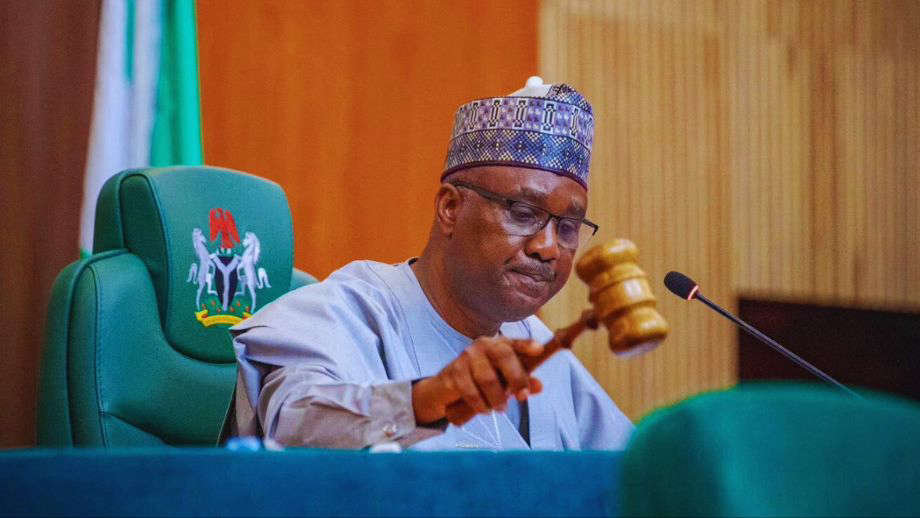
The Speaker of the House of Representatives, Rep. Abbas Tajudeen, has said that the National Assembly included both electronic and manual transmissions of results in the amended Electoral Act to avoid disenfranchising the Nigerian electorate and prevent voter apathy during the 2027 general elections.
Speaker Abbas noted that, due to inadequate internet penetration in the country, it would be counterproductive to allow only one electronic method of results transmission under the Electoral Act.
He spoke when he hosted the Ambassador of Spain to Nigeria, Ambassador Felix Costales, during a courtesy call at his office in Abuja over the weekend.
He received the Spanish Ambassador in the company of the Chairman of the House Committee on Appropriations, Hon. Abubakar Kabir Bichi; the Chairman of the Committee on Foreign Affairs, Hon. Wole Oke; and the Chairman of the Nigeria-China Parliamentary Friendship Group, Hon. Jafaru Yakubu.
This is even as the Spanish Ambassador revealed that his country also transmits election results manually.
The Speaker also assured that, based on his interaction with the Chairman of the Independent National Electoral Commission (INEC), Prof. Joash Amupitan, the 2027 general elections “will be more transparent, accommodating, and inclusive.”
On the Electoral Act, the Speaker said, “…as you said, sometimes people scream far beyond the exact level of the issue. Many people think we need to embrace real-time electronic transmission in Nigeria. Still, within the very short time you’ve been in Nigeria, you should be able to speak to the quality of our internet network. You should know that even in advanced cities like Abuja, you are not guaranteed stable internet services all the time.
“Based on the NCC report, they said Nigeria is still underserved by almost 40 per cent, which means 40 per cent of territories at large in Nigeria are not covered by the internet. Now, tell me: for those who say we should go ahead and do that already, if you look at the number of our registered voters in this country, it is alarming. It is sad to say that, even with the manual arrangement we are using, we are only able to capture about 12-15 per cent of registered voters who come to vote every four years—that’s voter apathy. Very few people go out to vote.
“Now, if we are to introduce (only) the electronic system, it will further reduce the number because 40 per cent of the country will probably not be able to vote as they don’t have adequate internet services. It means what we should be expecting is not only disenfranchising the voters, denying some people the right to vote, but we will also record, perhaps, the lowest number of voters in the next elections. These are all avoidable. That is why, in our wisdom, we said the Electoral Act should be a hybrid, combining both manual and electronic systems. Where it is feasible to use the electronic transmission, use the electronic transmission; where it is not possible, use the manual, because there is no way one form, particularly the electronic, can be used entirely in all parts of the country for the elections.”
Speaker Abbas explained that members of the opposition who rose against the inclusion of both electronic and manual transmission of results know the true situation of the inadequacy of internet services in the country.
“The opposition, even though they know the truth, they are Nigerians, they live in Nigeria, they travel all over Nigeria, they know that the level of internet penetration in Nigeria is inadequate. There is no way you can have transparent elections with an inadequate system, and due to our country’s energy crisis, we do not have enough electricity. The internet is always powered; how do you power the entire country on the day of the election so phones and internet work, with adequate electricity? All those are challenges that, for now, will not provide us the opportunity to do real-time transmission online.”
The Speaker stated that every democracy is a work in progress. “In our entire democracy, we will continue to improve year after year, election after election. America is not what it is today (just like that) if you look at its history. All democracies undergo challenges. I believe Nigeria, with the support of countries like Spain, will do better.
“We expect you to continue to guide us and give us all the technical advice and support to do better, particularly in the National Assembly, through collaboration between your country and our parliament. It will go a long way toward strengthening our competence, particularly in legislative drafting and related areas. I believe that with what you have in Spain, Nigeria can benefit a lot.”
Explaining that Nigeria is doing its best to improve its democracy, Speaker Abbas said, “You cannot say you have everything that you require. You keep on learning. We believe that Nigeria is not doing badly, even though it may not be at the rate the international community would want to see. We are moving slowly and gradually. I assure you that the next election will be more transparent, accommodating, and inclusive than the previous ones. I had the singular opportunity of being with the new INEC chairman. I heard all his plans—what he is planning to do. I believe if all that he said is implemented, Nigeria will move forward.”
Earlier, the Spanish Ambassador to Nigeria, Amb. Contales said his visit was to seek the Nigerian Parliament’s understanding to deepen bilateral relations between the two countries, especially in legislative diplomacy.
He said Spain would follow the 2027 elections closely, assuring that, “You can count on us, whatever we can do to deepen Nigerian democracy. Yes, there may be challenges, but you can count on us in any way possible.”
“I know it is a busy time for the parliament with the approval of a new Electoral Act. I wanted to come and visit you before then. We have the elections here already. Because of the importance of your country, we want to deepen parliamentary diplomacy with Nigeria. It is not yet as developed as we have with other nations, but it is something we should try and welcome in the future, maybe after the elections.”
On the elections, he said, “Of course, we are going to follow closely the electoral period ahead of us. It is a long period; elections are always big times; opinions are always polarised. Sometimes, when you dig down, you realise the issues are not as big as they seem in public discourse. It happens a lot in Spain, where politics is now very, very polarised in Parliament. We also have the minority; it is a phenomenon we witness in Europe and other nations, including the US, where there is polarisation.
“At the end of the day, if you want to move forward in democracy, you have to reach some level of compromise. We have to try to govern by consensus. Of course, there is rivalry in the game of parliament; we all know this. You go to elections and try to win.”
– Culled from Vanguard

-
 news8 years ago
Osun Government presents 2015, 2016 audited accounts…sets record as the first state in Nigeria to publicly declare accounts
-
 crime6 years ago
Arotile’s ex-classmate had no driver’s licence, report reveals
-
 lifestyle6 years ago
Osun CP Pays Alapomu Courtesy Visit
-
 lifestyle8 years ago
Amazing Tips for an Outstanding Makeup
-
 news5 years ago
2023: Kola Abiola Set To Declare For Presidency
-
 entertainment6 years ago
sanwo-Olu honours sacked chaplain after Ambode’s wife saga
-
 business5 years ago
#EndSARS: Access Bank announces N50 billion interest-free facility for businesses
-
 entertainment6 years ago
See how Women now use toothpaste to tighten vagina