

business
FG Says No Return to Fuel Subsidy or Multiple Exchange Rates, Defends Tinubu Reforms

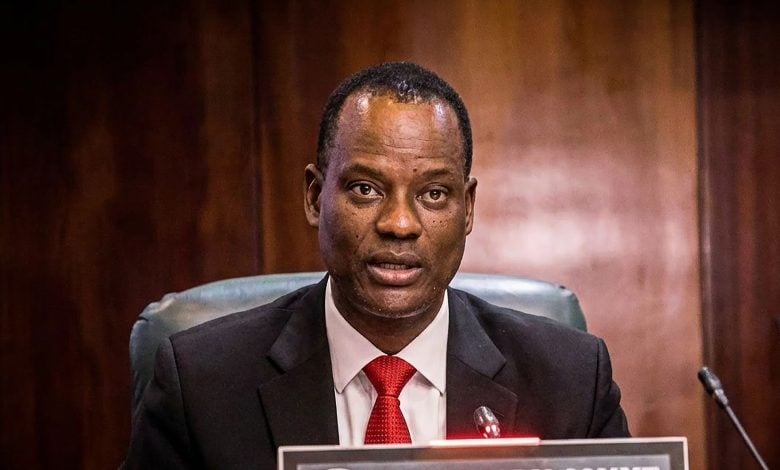
The Federal Government has said it will not bring back fuel subsidy or multiple foreign exchange rates, insisting that the economic reforms introduced by President Bola Tinubu will not be reversed.
The Minister of Finance and Coordinating Minister of the Economy, Taiwo Oyedele, stated this on Saturday on the sidelines of the World Bank and International Monetary Fund meetings in Bangkok, Thailand.
Oyedele was responding to questions about whether the government plans to reverse its economic policies ahead of the 2027 general elections.
According to him, the question of policy reversal has come up repeatedly in meetings with rating agencies, investors and multilateral institutions.
He clarified that the government has no intention of reintroducing petrol subsidy or returning to the regime of multiple exchange rate windows.
He said, “And let me be clear as well, this was a recurring question almost through all our engagements, but also with the rating agencies, with the investors, and the multilateral institutions. Every time they ask, are you reversing your plans? Are you bringing back subsidies? Let me be clear, there will be no return to fuel subsidies or multiple exchange rates.”
The minister’s statement comes at a time when there is renewed political debate over petrol subsidy removal.
Opposition figures including former Vice President Atiku Abubakar of the African Democratic Congress and Peter Obi of the Nigeria Democratic Congress have criticised the reforms and proposed alternative measures to ease the cost of living crisis.
Atiku has suggested a subsidy arrangement tied to domestic production and supply of crude to local refineries. He also described the recent 30-day petrol discount as a temporary measure that would not offer lasting relief.
Peter Obi on his part argued that the reforms were implemented without adequate production-driven support to cushion the impact on citizens.
The Tinubu administration has however maintained that removal of fuel subsidy and unification of the exchange rate were necessary to fix longstanding structural problems.
The government said the subsidy regime was unsustainable, prone to abuse and responsible for smuggling of petrol to neighbouring countries. It also said the former multiple exchange rate system encouraged arbitrage, corruption and depletion of foreign reserves.
President Tinubu announced the removal of petrol subsidy in May 2023 during his inauguration, a decision that ended decades of government control of petrol pricing and led to sharp increases in fuel and transport costs.
The forex reform consolidated multiple windows into a market-driven system aimed at improving transparency and strengthening the market.
Both policies have faced public criticism over rising prices of food, transport and other essentials, with labour unions and civil society groups staging protests over cost of living pressures.
Amid the concerns, the government introduced relief measures including a recent 30-day retail margin discount at NNPC stations, where the state oil company sold petrol at cost price.
Some Nigerians interpreted the move as a return to subsidy, but Oyedele dismissed the claim.
He explained that the discount was a time-bound commercial decision by NNPC to reduce its margin and support Nigerians, and not a subsidy funded from public resources.


-
 news9 years ago
Osun Government presents 2015, 2016 audited accounts…sets record as the first state in Nigeria to publicly declare accounts
-

 lifestyle7 years ago
Osun CP Pays Alapomu Courtesy Visit
-
 crime6 years ago
Arotile’s ex-classmate had no driver’s licence, report reveals
-
 lifestyle9 years ago
Amazing Tips for an Outstanding Makeup
-

 news6 years ago
2023: Kola Abiola Set To Declare For Presidency
-

 entertainment7 years ago
sanwo-Olu honours sacked chaplain after Ambode’s wife saga
-

 business6 years ago
#EndSARS: Access Bank announces N50 billion interest-free facility for businesses
-

 entertainment7 years ago
See how Women now use toothpaste to tighten vagina