

business
NDIS 2026: Diaspora Investors Warned To Verify Mortgage Banks, Property Titles Before Buying Land In Nigeria

NDIS 2026: Diaspora Investors Warned To Verify Mortgage Banks, Property Titles Before Buying Land In Nigeria
The Nigerians in Diaspora Commission, NiDCOM, has warned Nigerians living abroad to be very careful when investing in Nigeria’s real estate sector, especially by learning the difference between licensed mortgage institutions and ordinary property developers, and by verifying property titles before paying any money.
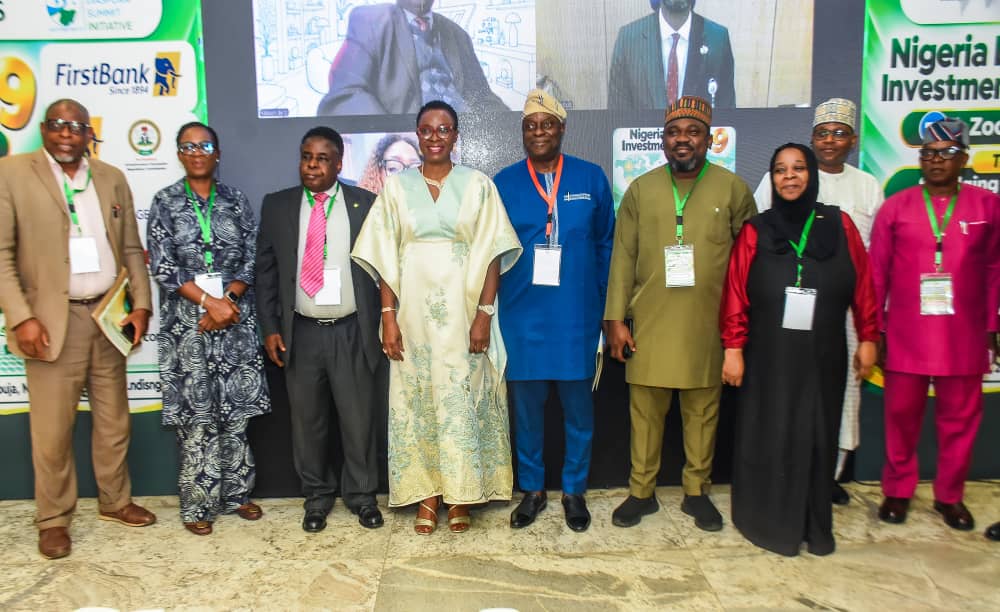
The warning was given during a panel discussion on Infrastructure Projects: Mobilising Diaspora Capital for Credible Infrastructure Projects, during the second day of the 9th Nigeria Diaspora Investment Summit, NDIS, in Abuja.
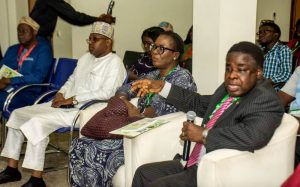
From left: Summit Coordinator, Planning Committee, Mobolaji Lewis; Team Member, Hon. AbdulRahman Terab; Head of Diaspora Banking, First Bank of Nigeria Ltd., Abimbola Meshinoye and the Secretary of Nigerians in Diaspora Commission (NiDCOM), Dr Sule Bassi, during a panel discussion at the 9th Nigeria Diaspora Investment Summit in Abuja on Wednesday (11/11/26).
The summit, with the theme Bridging the Trust Gap: Connecting Diaspora Capital with Credible Home-based Opportunities, was moderated by Marie David, J.D., Founder of Shefa Ventures, Atlanta, Georgia, and Founder of Vantage Point Academy, Abuja.
NiDCOM Desk With EFCC Recovering Diaspora Investments
Speaking on NiDCOM’s interventions to protect diaspora investors, the Acting Secretary of the Commission, Hon. Abdulrahman Terab, disclosed that one of the Commission’s earliest initiatives, about five years ago, was the establishment of a dedicated desk in collaboration with the Economic and Financial Crimes Commission, EFCC, to address fraud cases, particularly those relating to real estate transactions.
He stated that several cases had been handled through the initiative, with many Nigerians benefiting from the intervention and recovering their investments.
Terab explained that NiDCOM receives petitions from Nigerians in the Diaspora who have experienced challenges with property transactions and follows up on such complaints through the appropriate channels.
NiDCOM And First Bank Housing Platform For Diaspora
He further disclosed that the Commission, in collaboration with First Bank, had established a reliable housing platform to provide Nigerians in the Diaspora with a more secure and dependable pathway to homeownership, while minimising the risks associated with real estate transactions.
According to him, the initiative is designed to ensure that Nigerians receive value for their money and have access to more credible housing opportunities.
National Real Estate Regulatory Agency Coming
On efforts to strengthen regulation in the real estate sector, the Acting Secretary welcomed the recent move by the National Assembly, led by the Speaker and involving both the Senate and the House of Representatives, towards establishing a National Real Estate Regulatory Agency.
He noted that the proposed legislation, which will undergo the necessary legislative processes in both chambers, is a response to longstanding concerns about inadequate regulation and oversight in the sector.
Do Not Confuse Developers With Mortgage Banks, AG Mortgage Bank Warns
Speaking during the discussion, Dr. Ojonimi Simon Ogwu, Executive Director and Chief Executive Officer of AG Mortgage Bank, identified the difficulty in distinguishing genuine mortgage institutions from ordinary real estate developers as one of the major challenges confronting Nigeria’s property market.
He noted that many Nigerians, particularly those living abroad, often mistake property development companies with impressive signboards and strong online visibility for established mortgage institutions.
This misconception, he warned, has exposed unsuspecting investors to fraudulent transactions, resulting in significant financial losses and, in some cases, the inability to recover either their investments or the properties purchased.
Ogwu stressed the importance of conducting comprehensive due diligence before acquiring properties, emphasising that an attractive building or strategic location does not automatically guarantee legitimate ownership.
He advised prospective buyers to insist on proper title verification, confirmation of ownership, relevant government approvals and compliance with applicable land regulations, including the provisions of the Land Use Act.
Beware Of Family Land Disputes In Lagos
He further highlighted the prevalence of family land ownership disputes, particularly in Lagos, where buyers sometimes purchase properties from individuals claiming to represent entire families, only to encounter competing ownership claims after payment has been made.
He therefore encouraged Nigerians in the Diaspora to approach recognised and appropriate mortgage institutions and professional channels rather than relying solely on property developers or informal recommendations from friends and relatives.
Crowdfunding To Pool Diaspora Capital For Credible Projects
Also speaking, Dr. Kazeem Bello, Principal Partner and CEO of Afrique Capital and Equity Funds Limited, ACEFUNDS, highlighted the need to create innovative financing structures that would enable Nigerians at home and in the Diaspora to pool resources towards credible projects.
Responding to a question on how smaller investments could be combined with funding from lenders, developers, development finance institutions and pension funds, Bello emphasised the importance of crowdfunding as a mechanism for widening access to capital, particularly for young and emerging Nigerian entrepreneurs.
He explained that successful fundraising requires project promoters to demonstrate commitment to their ventures through an initial contribution, a well-structured business model and credible proposals.
According to him, preparation, capacity-building and business formalisation are essential for entrepreneurs seeking investment.
He noted that many small businesses in Nigeria remain informal and inadequately structured, limiting their ability to access institutional financing and other investment opportunities.
Bello added that ongoing efforts to develop a global crowdfunding initiative in collaboration with the Nigeria Diaspora Investment Summit and relevant partners is intended to provide a centralised platform through which Nigerians, including those in the Diaspora, can pool smaller contributions to support viable projects.
He explained that beyond providing funding, the initiative would incorporate training, mentorship and capacity-building to prepare entrepreneurs to attract investment and build sustainable businesses.
ICRC, Coronation Explain How Infrastructure Funds Protect Investors
Speaking on the role of regulation in strengthening investor confidence, Akwu Okolo, Director of Planning, Research and Strategy at the Infrastructure Concession Regulatory Commission, ICRC, stated that the Commission regulates the procurement process for infrastructure concession projects.
He noted the significant trust deficit surrounding diaspora investments, both from government and private-sector perspectives, and stressed the need for stronger institutional credibility, transparency and accountability to encourage greater participation.
Similarly, Mayowa Ikotun, Head of Coronation Infrastructure Fund, highlighted the regulatory and institutional safeguards available to protect investors participating in infrastructure funds.
He explained that fund managers operate under the regulatory oversight of the Securities and Exchange Commission, SEC, while trustees provide independent monitoring to ensure that funds are managed in accordance with their stated objectives.
He added that custodians also play a critical role by safeguarding the assets of investors.
According to him, these complementary structures provide multiple layers of protection, ensuring that investment decisions are professionally managed, independently monitored and aligned with regulatory requirements.
He further noted that infrastructure funds provide an organised investment framework through which individuals and institutional investors can pool resources to finance viable projects across sectors such as transportation, real estate, energy and social infrastructure.
He maintained that such structures could help address Nigeria’s infrastructure deficit while reducing the burden on individual investors to independently assess every project.
PEBEC Speaks On Regulatory Frameworks
There was another panel discussion on regulatory frameworks by Presidential Enabling Business Environment Council, PEBEC, with its Director General Princess Zahrah Mustapha Audu and Kachi Okezie, Principal Consultant at CTP International, UK, who also spoke in the same vein.
Diaspora investors, have you ever lost money to property fraud in Nigeria or do you verify titles before buying? Share your experience in the comment section and share this story to save someone abroad from losing money.












-
 news9 years ago
Osun Government presents 2015, 2016 audited accounts…sets record as the first state in Nigeria to publicly declare accounts
-

 lifestyle7 years ago
Osun CP Pays Alapomu Courtesy Visit
-
 crime6 years ago
Arotile’s ex-classmate had no driver’s licence, report reveals
-
 lifestyle9 years ago
Amazing Tips for an Outstanding Makeup
-
 news6 years ago
2023: Kola Abiola Set To Declare For Presidency
-

 entertainment7 years ago
sanwo-Olu honours sacked chaplain after Ambode’s wife saga
-

 business6 years ago
#EndSARS: Access Bank announces N50 billion interest-free facility for businesses
-

 entertainment7 years ago
See how Women now use toothpaste to tighten vagina