

news
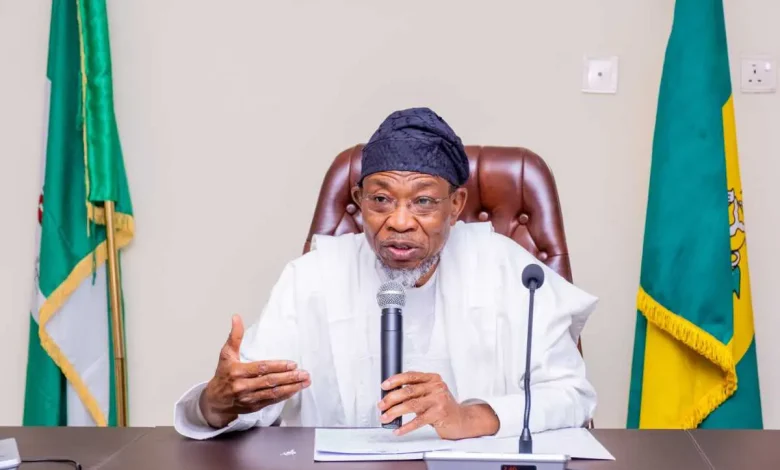
ADC Crisis Deepens: Aregbesola Fights Back, Drags Gombe, INEC, Mark To Appeal Court Over Sacked Leadership

ADC Crisis Deepens: Aregbesola Fights Back, Drags Gombe, INEC, Mark To Appeal Court Over Sacked Leadership
The battle for the soul of the African Democratic Congress, ADC, has just taken a fresh twist.
Days after a Federal High Court in Abuja sacked the David Mark-led leadership of the party, the National Secretary of the faction, Chief Rauf Aregbesola, has refused to accept the judgment. He has now run to the Court of Appeal to fight for his seat and the survival of the Mark-led National Working Committee.
Aregbesola, the former Governor of Osun State, filed the appeal on Friday through his lead counsel, Mohammed Sheriff, SAN. He is asking the appellate court to completely set aside the November 5 judgment delivered by Justice Peter Lifu.
In the notice of appeal sighted by newsmen on Sunday, November 8, 2026, Aregbesola listed five respondents: Nafiu Gombe, the ADC, Senator David Mark, the Independent National Electoral Commission, INEC, and Chief Raph Nwosu as first to fifth respondents.
Why Aregbesola Says The High Court Got It Wrong
At the heart of Aregbesola’s appeal is one big question: Did the Federal High Court even have the power to decide who leads the ADC?
His lawyer says NO.
According to the appeal, the trial court had no jurisdiction to entertain the dispute over his emergence as National Secretary and the decisions taken at the party’s 99th National Executive Committee, NEC, meeting.
Aregbesola wants the Appeal Court to:
Reverse the High Court’s decision to assume jurisdiction over the ADC leadership dispute
Strike out all claims against him and claims based on the 99th NEC resolutions
Alternatively, overturn the findings that nullified his assumption of office and the NEC resolutions
Set aside the declaration that Gombe’s four-year tenure is still valid and that Gombe should oversee the affairs of the ADC
If the Appeal Court insists the High Court had jurisdiction but a fresh hearing is needed, send the case back to the Federal High Court for retrial before another judge
Award cost of the appeal in his favour
Sheriff raised five grounds of appeal, accusing the trial judge of misinterpreting the laws governing political party administration.
The Jurisdiction War: INEC Oversight vs Party Internal Affairs
One of the strongest arguments in the appeal is that Justice Lifu wrongly used INEC’s oversight role to claim jurisdiction.
Sheriff argued that the fact that the court supervises INEC’s statutory activities does not automatically give it power to decide who leads a political party in an internal administrative matter.
He said the court wrongly relied on INEC’s oversight functions to assume jurisdiction over questions arising from the party’s internal arrangements.
Was It An Election Or An Interim Appointment? The Key Twist
The appeal also challenges how the trial judge interpreted Section 82(3) of the Electoral Act 2022 and Section 223(1)(a) of the 1999 Constitution, as amended.
Sheriff insists the judge got the law wrong.
Section 82(3) deals with elections into governing bodies of political parties, including filling vacant positions. Section 223(1)(a) requires parties to hold periodic democratic elections into their executive committees.
But Aregbesola’s camp says the ADC Constitution has another window: Article 23(4).
According to them, Article 23(4) empowers the appropriate executive organ of the party to appoint an eligible replacement pending an election at the next convention or congress.
In other words, Aregbesola was not elected, he was appointed on interim basis, as allowed by the party constitution.
Sheriff argued that the trial court failed to resolve this crucial distinction before applying election rules to his client.
The absence of voting did not resolve whether the resolutions effected an election or an interim appointment under the provision relied upon by the appellant. The lower court applied the requirements governing an election to fill a vacancy without first resolving whether the appellant’s assumption of office fell within the interim appointment power asserted under Article 23(4), he argued.
This, he said, is the heart of the case: you cannot judge an interim appointment with election rules.
Aregbesola Also Files Stay Of Execution To Stop The Judgment
Aregbesola is not just appealing, he is also moving to stop the judgment from being enforced while the appeal lasts.
On November 7, his lawyer filed a separate motion on notice at the Federal High Court, marked FHC/ABJ/CS/1819/2025, asking for a stay of execution of the November 5 judgment.
Specifically, he wants the court to stop the enforcement of Orders 7 and 8 of the judgment, and any further actions that could arise from their implementation.
The motion contains five reliefs supported by 12 grounds.
Sheriff said his client is dissatisfied with important aspects of the judgment and has already exercised his constitutional right of appeal.
He argued that the appeal raises substantial legal and factual questions, especially on jurisdiction and interpretation of the ADC constitution and Electoral Act, which the Appeal Court must decide.
If the judgment is enforced before the appeal is heard, he warned, it could destroy the very issues being contested.
How Did ADC Get Here? The Gombe vs Mark Fight Explained
The crisis started when Nafiu Gombe went to court to challenge the emergence of the Mark-led leadership.
Gombe claimed that after former National Chairman, Chief Raph Nwosu, resigned, he, as deputy, was constitutionally entitled to take over the leadership of the party.
He asked the court to invalidate all decisions and actions taken by the Mark-led leadership and to restrain Mark, Aregbesola and other members of the interim National Working Committee from parading themselves as legitimate leaders.
His argument: the process that produced the new leadership violated the ADC constitution and the Electoral Act.
He sued the ADC, INEC, Mark, Aregbesola and Nwosu as first to fifth defendants.
But the Mark camp fought back. They told the court Gombe was no longer serving as deputy national chairman when Nwosu resigned, so he had no right to claim the chairmanship on that basis.
They urged the court to dismiss the case.
After hearing both sides, Justice Lifu on November 5 delivered judgment in favour of Gombe, invalidating the emergence of the Mark-led leadership.
Now, Aregbesola has thrown the ball back to the Appeal Court.
What Next For ADC Ahead Of 2027?
With 2027 politics heating up, the ADC leadership crisis could not have come at a worse time.
If the Appeal Court upholds the High Court judgment, the Mark-led NWC, including Aregbesola, will remain sacked, and Gombe’s camp will take control.
If it overturns it, Mark and Aregbesola will breathe a sigh of relief and consolidate their hold on the party.
For now, all eyes are on the Court of Appeal and the Federal High Court’s ruling on the stay of execution.
Who do you think is the real leader of ADC: David Mark’s camp or Nafiu Gombe? Drop your take in the comments.








-
 news9 years ago
Osun Government presents 2015, 2016 audited accounts…sets record as the first state in Nigeria to publicly declare accounts
-

 lifestyle7 years ago
Osun CP Pays Alapomu Courtesy Visit
-
 crime6 years ago
Arotile’s ex-classmate had no driver’s licence, report reveals
-
 lifestyle9 years ago
Amazing Tips for an Outstanding Makeup
-
 news6 years ago
2023: Kola Abiola Set To Declare For Presidency
-

 entertainment7 years ago
sanwo-Olu honours sacked chaplain after Ambode’s wife saga
-

 business6 years ago
#EndSARS: Access Bank announces N50 billion interest-free facility for businesses
-

 entertainment7 years ago
See how Women now use toothpaste to tighten vagina