

news
NDDC Emphasises Alternative Dispute Resolution For Effective Project Delivery In Niger Delta

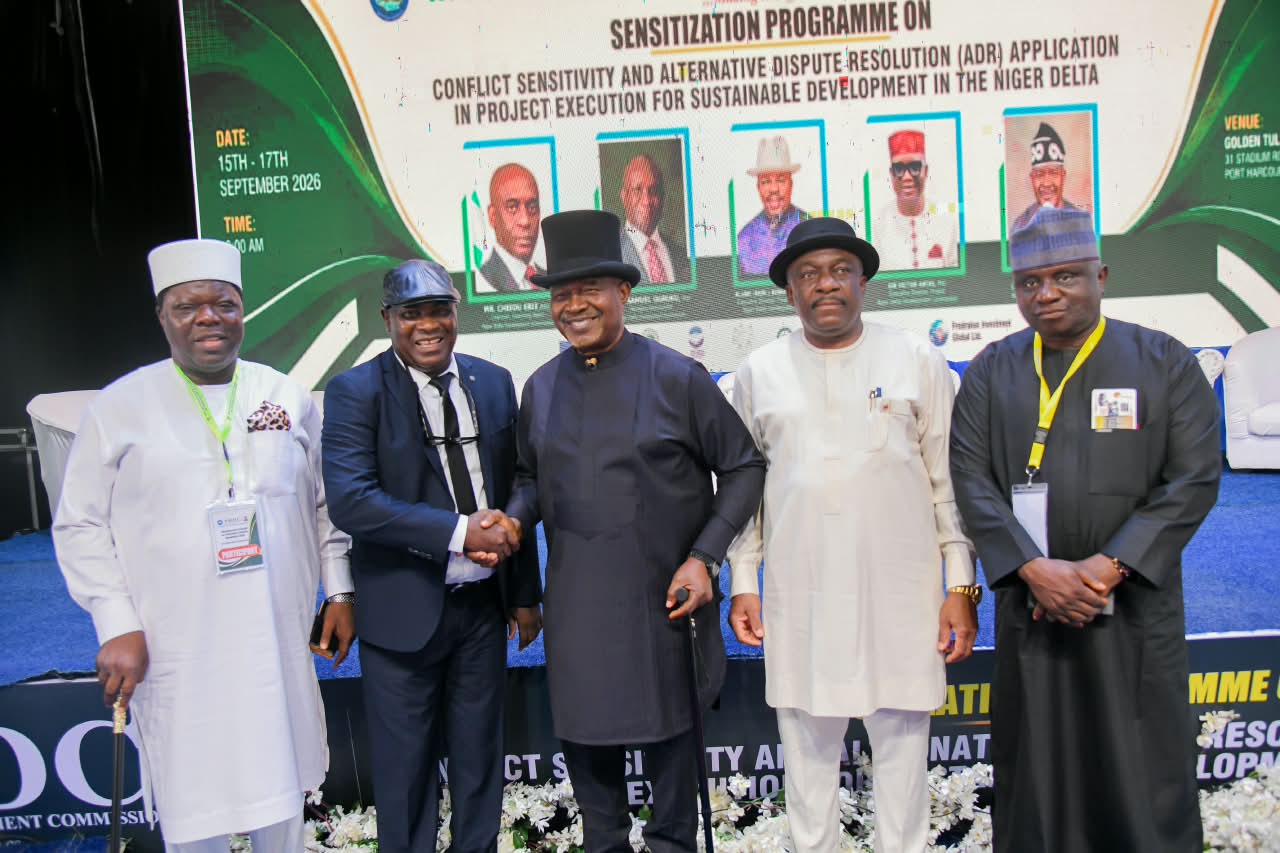
The Niger Delta Development Commission, NDDC, has stressed the importance of Alternative Dispute Resolution, ADR, in ensuring quick resolution of disputes for effective project delivery and sustainable development in the Niger Delta.
The Managing Director of NDDC, Dr Samuel Ogbuku, made this known at the opening of a three-day sensitisation programme organised for Contractors and Consultants in Port Harcourt.
Ogbuku, who was represented by the Executive Director, Corporate Services, Hon. Ifedayo Abegunde, said disagreements are bound to occur during project execution, but what is important is how fast and professionally they are resolved.
He said Alternative Dispute Resolution is crucial because every project is more than just a contract, adding that when conflicts stall projects, the effect goes beyond contractors and the Commission to the people who are waiting for development.
According to him, unresolved disputes can lead to delay in project completion, increase in costs and strain relationships between NDDC, contractors, consultants and host communities.
He stated, We want our contractors and consultants to understand that you are not merely participants in project execution; you are also critical first responders in conflict management. You are often closest to the projects, closest to the community and closest to emerging issues.
Ogbuku noted that preventing conflicts, resolving disputes on time and delivering projects successfully will help to achieve a more peaceful, productive and prosperous Niger Delta.
He urged participants to build a culture of early intervention, stressing that stakeholders should not wait for conflicts to become crises before taking action. He said conflicts should be identified early, managed professionally and resolved effectively.
In his remarks, the Director of Alternative Dispute Resolution Department, Dr Godwin Ogedegbe, said the programme was organised to pursue sustainable development in the Niger Delta region.
He noted that the Niger Delta is blessed with abundant natural resources and vibrant communities, but the complexities of its social, economic and environmental realities can create tensions and disputes which, if not well managed, can affect projects meant to develop the region.
Ogedegbe said conflict sensitivity requires deliberate understanding of the communities where NDDC operates, and ensuring that the Commission’s interventions do not cause divisions but promote inclusion, trust and cooperation.
He explained that Alternative Dispute Resolution provides a structured, efficient and peaceful way of resolving disputes through dialogue, fairness and mutual respect, instead of confrontation and litigation.
He urged participants to be open-minded, actively take part in the programme, share their experiences and embrace the principles to be discussed, adding that together, stakeholders can build a culture of development in the Niger Delta anchored on peace, inclusivity and sustainability.
Delivering his keynote address titled Conflict Sensitivity and Alternative Dispute Resolution, Application in Project Execution for Sustainable Development in the Niger Delta, the Dean of the Faculty of Multidisciplinary Studies, University of Ibadan, Professor Isaac Olawale, advised NDDC contractors and consultants to identify conflict risks early, choose appropriate ADR methods and ensure projects stay on track while protecting relationships, public value and sustainable development.
Olawale emphasised that even a technically sound project can fail if relationships, expectations and grievances are not properly managed.
The programme was confirmed in a statement by the Director of Corporate Affairs, Seledi Thompson-Wakama, on September 17, 2026.









-
 news8 years ago
Osun Government presents 2015, 2016 audited accounts…sets record as the first state in Nigeria to publicly declare accounts
-
 crime6 years ago
Arotile’s ex-classmate had no driver’s licence, report reveals
-

 lifestyle7 years ago
Osun CP Pays Alapomu Courtesy Visit
-
 lifestyle9 years ago
Amazing Tips for an Outstanding Makeup
-
 news5 years ago
2023: Kola Abiola Set To Declare For Presidency
-

 entertainment7 years ago
sanwo-Olu honours sacked chaplain after Ambode’s wife saga
-

 business6 years ago
#EndSARS: Access Bank announces N50 billion interest-free facility for businesses
-

 entertainment7 years ago
See how Women now use toothpaste to tighten vagina