

lifestyle
Odua Byte Busters: Public School Students In Southwest Create Security Apps To Tackle Kidnapping And Online Fraud

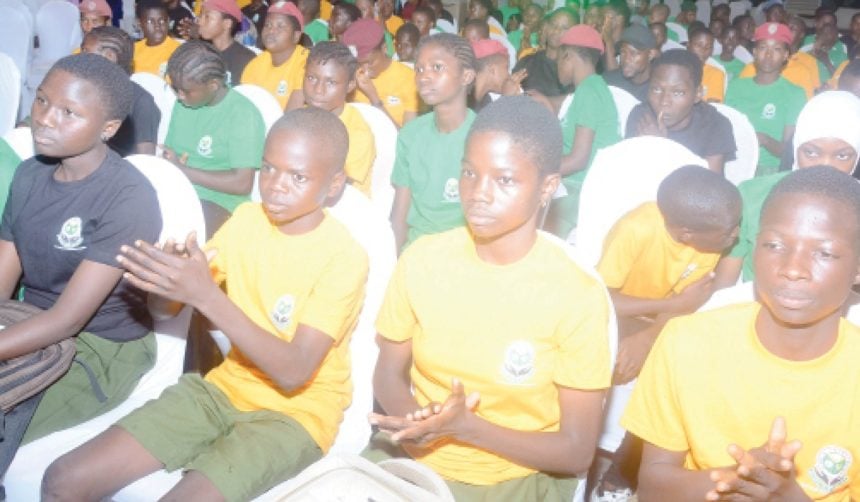
Students from public secondary schools across the six states of the South-West have stunned guests in Ibadan with homegrown technology solutions aimed at tackling insecurity and online fraud.
The students gathered on Friday October 31, 2026 at the International Conference Centre, University of Ibadan for the second edition of the Byte Busters Coding Club Showcase.
The showcase is a flagship initiative under the Digital Education for Innovation and Economic Development programme, also called DEFINED, powered by the Odu’a Investment Foundation.
This year, more than 220 students from 20 coding centres spread across 18 local government areas in the South-West presented working prototypes they built from scratch.
The star of the day was Aramoko District Commercial Secondary School, Ekiti State, which won first place. The school team led by Johnny Pius developed Safe Guardian App, a personal safety app that lets users send distress alerts and share live location with trusted contacts during kidnapping, banditry and other emergency situations.
Pius said the idea was born out of the rising cases of kidnapping and banditry in the country. He explained that many victims struggle to call for help quickly, and the app solves that by giving a one-tap emergency notification and location sharing feature.
Apart from security apps, students built solutions across different sectors.
Some of the other apps on display included an AI-powered computer-based test platform to curb exam malpractice, a sign language translation app to help people with hearing impairment, Tomato AI to help farmers detect crop diseases, an AI marketplace to connect local traders to buyers, a maize storage advisory app to reduce post-harvest losses, a Yoruba-English translation app, and an app that flags internet scam messages.
Chairman of the Advisory Council of Odu’a Investment Foundation, Ambassador Olatokunbo Awolowo Dosumu, said she was impressed by how sophisticated the projects have become within a year.
She said the world is being shaped by artificial intelligence and digital platforms, and Nigerian children must not be left as mere consumers of foreign technology. She said the foundation is determined to make them creators and problem solvers.
Dosumu also highlighted the teacher training component of the project, saying sustainable change cannot happen without empowering teachers. She called on Southwest governors, corporate bodies, alumni associations and diaspora philanthropists to support the programme to reach underserved communities.
Speaking on behalf of the Chairman of Odu’a Investment Company Limited, Dr Tola Kasali said the Byte Busters project is a direct investment in human capital that will define the economic future of the South-West. He noted that bridging the digital skills gap requires collaboration between government, private sector, tech companies and schools.
Project Director Professor Seun Kolade revealed the scale of growth recorded. According to him, Byte Busters started in 2025 with just about 100 pupils from nine centres, but today it has grown to over 4,500 learners across 20 centres.
He said 72 teachers were enrolled in the first batch of the Digital Literacy Training for Teachers, with 67 completing the programme. The model is train-the-trainer, with a goal to reach 3,000 teachers before the end of the year.
Kolade stressed that teaching coding is not only about producing programmers, but about building critical thinking, problem-solving, collaboration and resilience in young people.
Pro-Chancellor of Emmanuel Alayande University of Education, Professor Ayoade Ogunkunle, linked the initiative to the legacy of Chief Obafemi Awolowo. He said it is symbolic that Awolowo introduced free education in the old Western Region, and his daughter Awolowo Dosumu is now championing free digital education for the same region.
He urged governments to increase funding for digital education from primary school level.
The organisers said the goal is to ensure access to digital education does not depend on where a child lives or how much their parents earn.


-
 news9 years ago
Osun Government presents 2015, 2016 audited accounts…sets record as the first state in Nigeria to publicly declare accounts
-

 lifestyle7 years ago
Osun CP Pays Alapomu Courtesy Visit
-
 crime6 years ago
Arotile’s ex-classmate had no driver’s licence, report reveals
-
 lifestyle9 years ago
Amazing Tips for an Outstanding Makeup
-

 news6 years ago
2023: Kola Abiola Set To Declare For Presidency
-

 entertainment7 years ago
sanwo-Olu honours sacked chaplain after Ambode’s wife saga
-

 business6 years ago
#EndSARS: Access Bank announces N50 billion interest-free facility for businesses
-

 entertainment7 years ago
See how Women now use toothpaste to tighten vagina